Heatwave parenting

Reflections on parenting in an unraveling world
We cannot promise our children a safe future. But we can give them a childhood rooted in love, courage, connection and aliveness. And we can use our power as adults to fight for the world they deserve.
I started my path in social change-making over ten years ago from the feeling that something is wrong in the world and I don’t know how to fix it, but for sure we need more trust, collaboration, and community. After years of working in decentralised organisations on social and technological grassroots innovation, sharing power and creating flatter hierarchies, I moved into an intense period of climate activism after reading the IPCC report of October 2018. Working with a global network of activists, I was quickly confronted with topics like climate grief and anxiety, conflict, and burnout. I learned much about the nervous system and how we might foster resilience while staying with the trouble in the long run.
When I became a mom in 2023, I felt what many of us do. I had so much more reason to care about the state of the world, but so much less time and energy. In those early months, so much of my being was consumed by moving through the day-to-day, the sleepless nights, tantrums, and a challenging relationship with my son’s dad. I didn’t have the energy or emotional capacity to engage with the news.
Now that my son is 3.5 years old, I do have more capacity to engage with the news of the world. It feels like the polycrises accelerated in ways I didn’t expect, while I tended to the falling apart and rearranging of my own small world: accelerating climate breakdown, the rise of fascism, an ongoing genocide in Gaza.
Heatwave summer
The heatwaves and wildfires in Europe over the last few months have brought climate breakdown so much closer to home. I’ve been grappling with what we have already lost and stand to lose for some years, but like many of us, I realised it’s all faster, closer, and more out of my control than I would have liked. Facing the collapse of our weather patterns, water systems, food chains, democracies, and social cohesion is terrifying, especially as a parent.
My attention shifted to adaptation. How could I keep my family safe? How to keep our home cool, how to structure our days? I found myself checking in with friends to see how they were faring and researching how to improve our disaster resilience by making sure we’d have access to water, food for a few weeks, and a well-stocked first aid kit.
Knowing that true resilience lies in community, I started looking at our neighbourhood. I had only just moved back to my hometown a few months ago. Who were my neighbours? Would we help each other? Who might have resources to share, and who would need them? And as the groundwater levels were spectacularly low, I started wondering: do people in my regional government really know how to best protect our water sources? Are they putting policies in place? I ordered the book Life House: Taking Care of Ourselves in a World on Fire by Adam Greenfield on social prepping and resolved to learn more about permaculture gardening and support local food producers.
Now that the temperatures have cooled down and we’ve had some proper rain, I am noticing in myself a tendency to want to go back to normal. Part of me would love to feel that the threat has passed and I can go back to living my life of slow, long-term activism. But I know that this was only the first serious taste of climate change for my family, that many families have been living with the consequences of climate breakdown for years, and that our actions in these next few years matter more than ever.
Letting death in
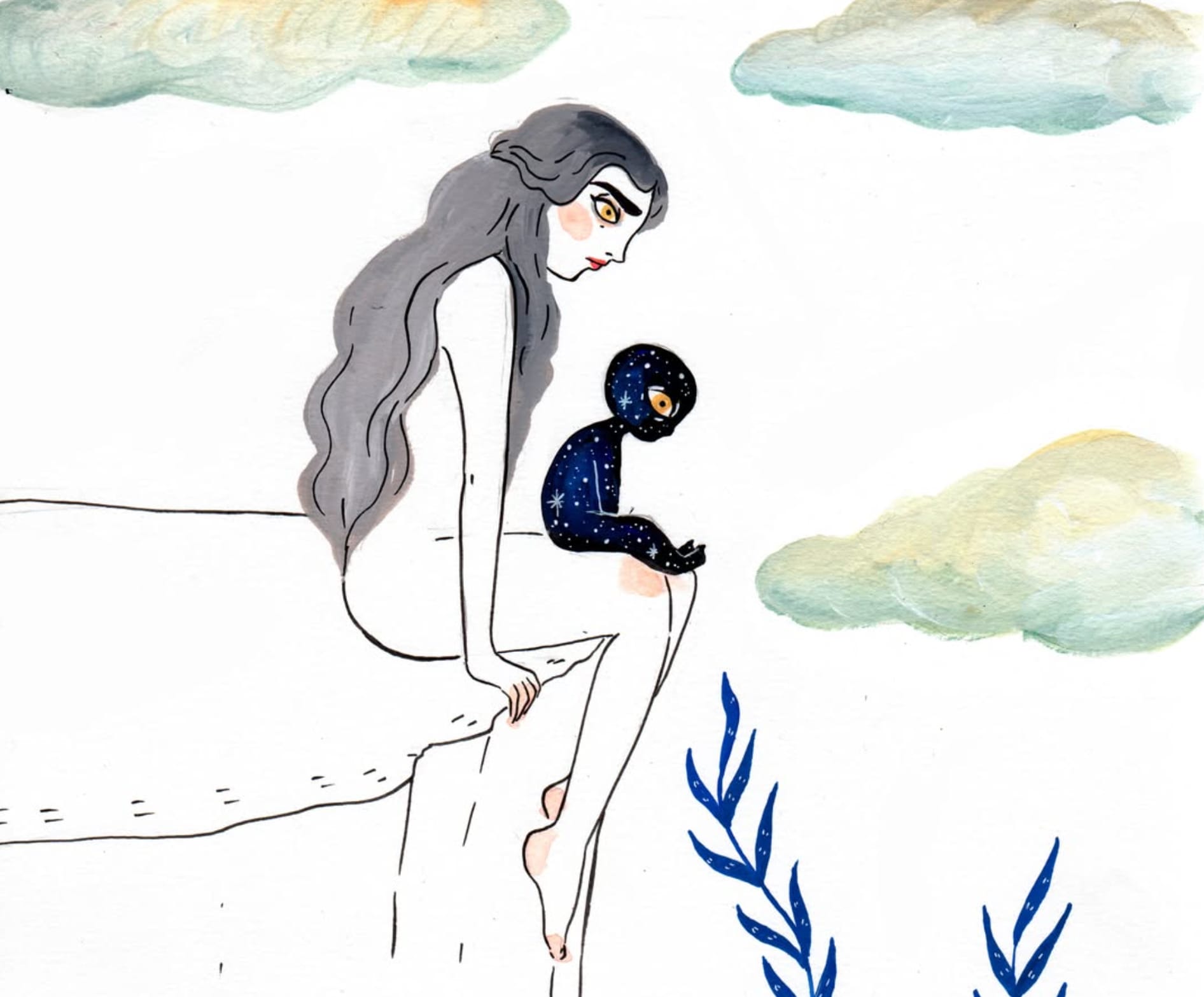
When I think about the future, there’s fear and grief. I am scared in the face of workings so enormous, complex, and terrifying that I have no way to predict what is coming. No way of making sure I’ll be able to protect my son from suffering or death.
And as a mother, I hate it.
My heart breaks for all the loss and suffering of others. Species extinct, children hurting, beauty lost.
But when I let myself go there, truly go there, there comes a moment after the tears, the anger, the emptiness. I no longer feel so anxious, distracted, or numbed out. I find that, in the face of death, life becomes so much more precious. All the beauty, the possibility of being here in the first place, all the deliciousness is at least as real.
I remember the miracle of being alive. And I am glad I get to share it with my son. I am glad that he gets to witness strawberries growing, living room dancing, the rush of bicycling for the first time. I am so glad I get to experience them with him.
I remember that no parent before me could be sure they would succeed in keeping their child safe. Knowing that things end makes me appreciate everything that still is. It makes me want to participate in life as fully as I can while I am here. And I want to do what I can to protect as much of it as I can. To me, that is what living with integrity looks like: to enjoy life and protect it. Letting my life be guided by that allows me to think of my own death with peace.
How do we parent for a changing world?
There was a moment this summer when I found myself in the garden crying because the stream next to our house was running dry, while being held by my mom. It was everything that she just stood there with me and stopped trying to tell me everything would be okay. Just being in grief and not-knowing together, my whole system could relax. What I needed from my mom at that moment was not to shield or coddle me, but not to be alone with holding it on my own.
I believe we do our kids a huge disservice if we downplay the gravity of what is happening to their world. But putting the responsibility of saving the world on the shoulders of the next generation is an equally harmful act of generational violence. As grown-ups, it is our task and responsibility to face what is happening.
My son is still little, but this brought up many questions for me. How should my parenting change for a changing climate? How could I prepare my son to survive and, hopefully, thrive in a changing world? And maybe even shape a better one in the process? I asked myself what skills my son would need, what values might support him. I kept coming back to things like creativity, emotional tools, self-efficacy, community, critical thinking, a sense of belonging in nature, and spiritual grounding.
I explored these questions with other parents, including Clément Moliner-Roy, with whom I hosted a small, continent-spanning workshop series for mothers and fathers on what it means to parent in these times. Through those conversations, I began to see that building the future my son deserves and creating the childhood I wish for him might, in fact, be one and the same thing.
Instead of focusing on the question of my childhood, “What do you want to be when you grow up?”, I could shift my attention to “How do you want to show up?” I could try my best to model facing uncertainty with courage, to ask for help and support others, and to find beauty and meaning no matter the circumstances. And maybe, coincidentally, end up creating a childhood full of wonder, connection, great memories, and less pressure to conform and compete.
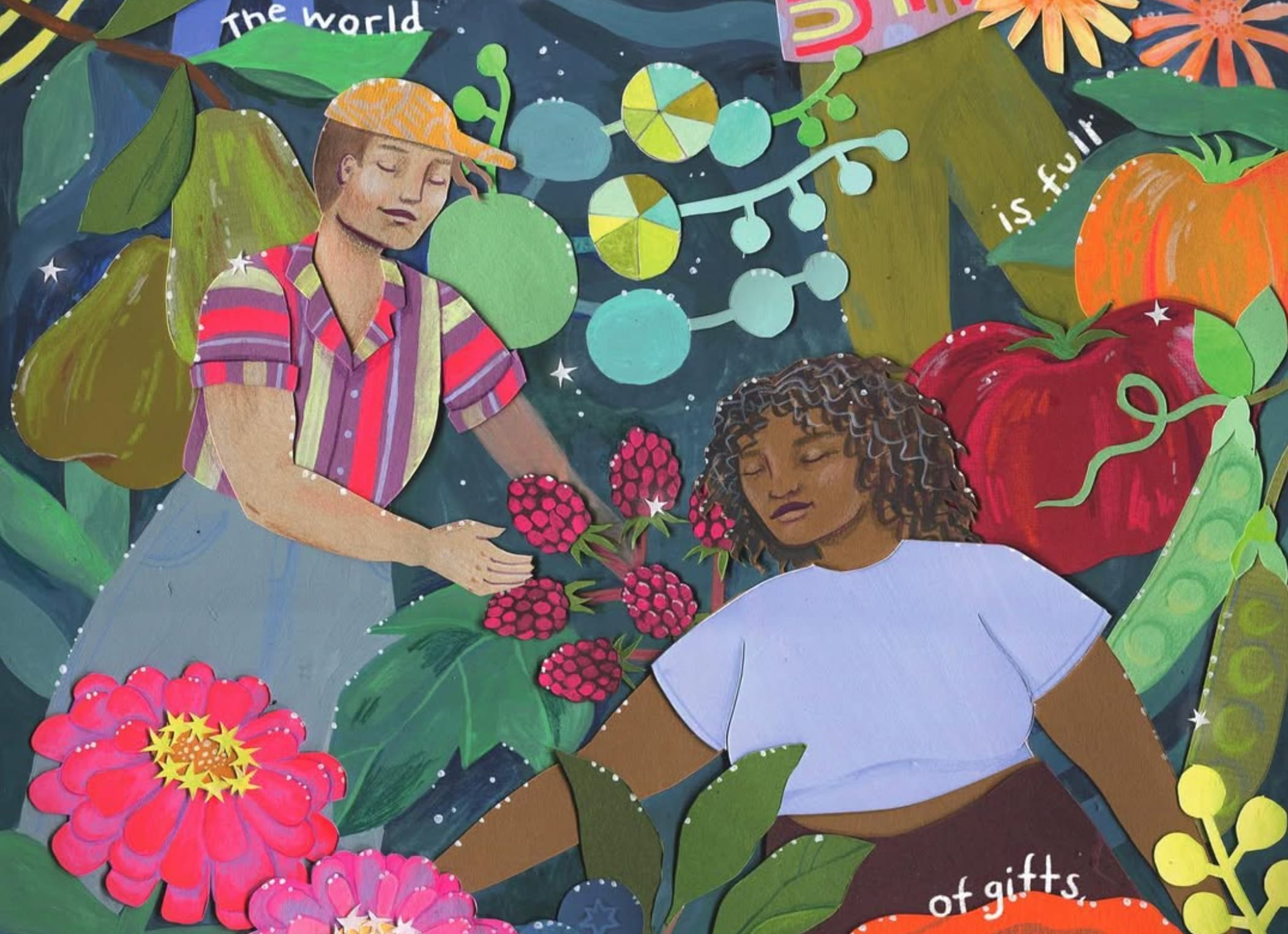
We don't know how this ends
It is hard to feel hopeful in the face of rising fascism, a collapsing climate, and the disintegration of humanitarian boundaries. My years in climate activism taught me to let go of “winning the fight”.
Joanna Macy’s The Work That Reconnects and Sophy Banks’ Healthy Human Culture helped me understand that things are moving in destructive and hope-giving directions at the same time, all the time, and at every scale. We have no way of knowing whether what we are facing is an end or a new beginning. It is very helpful to see these times as liminal, as times of transition. To accept that things are unraveling, learn to tolerate the uncertainty, and allow ourselves to imagine more beautiful alternatives.
No changemaker fighting against slavery, for women’s right to vote, or for a 40-hour work week ever knew if they would be successful when they set out. We can learn from them that hope isn’t something to simply have and sit on, but something to do. Something we choose, and then take steps towards.
It might be that our actions are not having a large-scale impact. But every person we touch, every loving moment, every life we save, every millimetre we move the needle matters. And maybe, just maybe, they will contribute to a tapestry of change that will eventually reach a critical mass. I am trying to hold all of these realities.
All I can do is keep showing up and do what I can to make the futures I am hoping for more likely. If I'd give up, if we'd give up, that’s how we’d really lose.
Parents have power
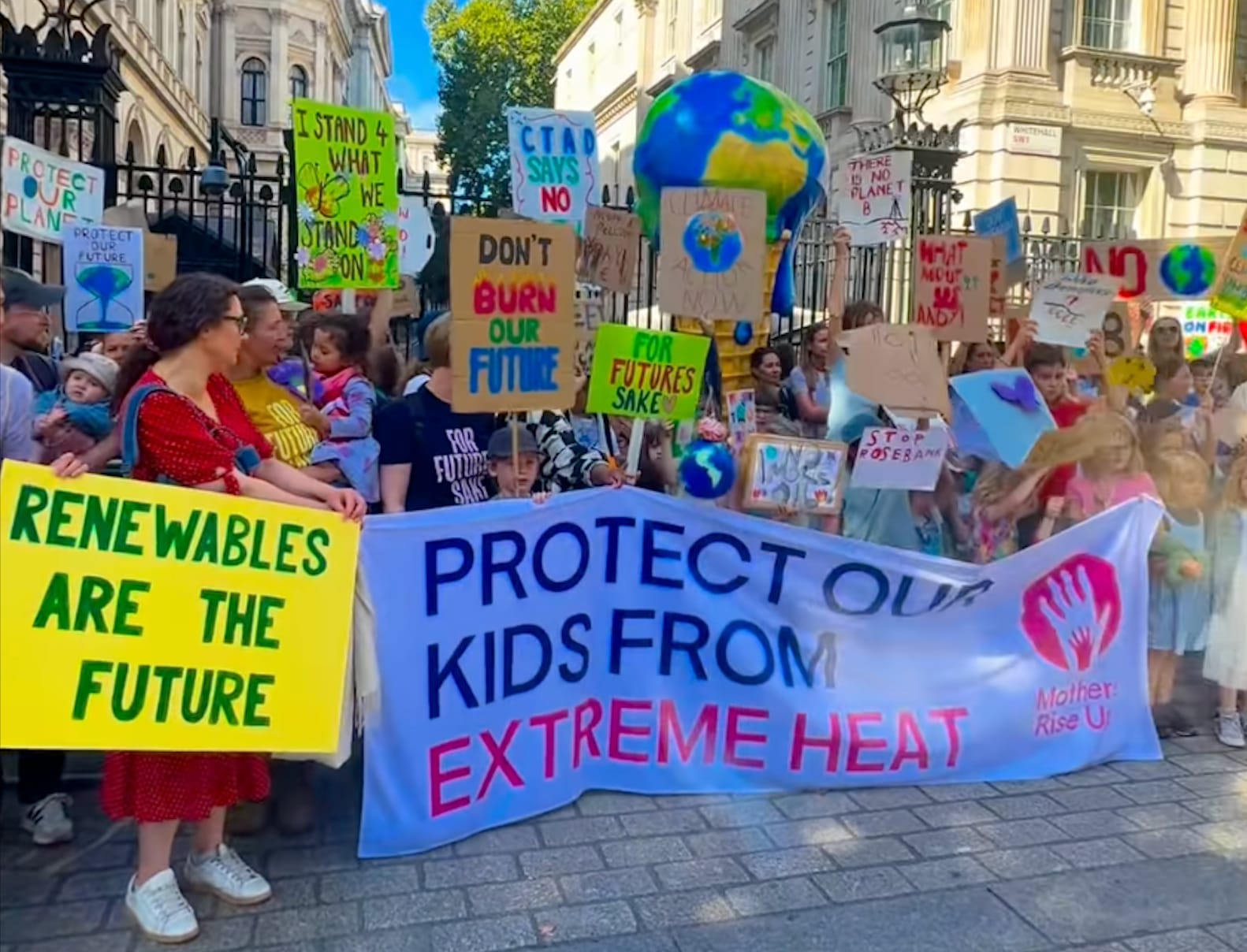
As parents, we are struggling with impossible questions and pressures in societies that don’t put care work at the centre. But we also have power. Governments rely on our votes, big corporations rely on our money, and we are actively creating and shaping culture. The choices we make, the values we live, the things we support (or stay silent about) all shape the world our kids are growing up in.
And while I believe in small actions, in not shouldering too much, in doing all the important things that keep everyday life going, I can feel a yearning for us as parents to start using our power in more radical ways.
I dream of a moment when we collectively say: we’ve had enough. What if, one day, we decided not to bring our kids to daycare or school, not to go to work, not to buy anything? I imagine a great stopping. The big corporations would loose their power. And the politicians who are always defending family values and talking about the future would be forced to actually listen. Forced to implement the solutions we’ve known about for years, and to protect life on this planet as if it were their job.
Because it is.
If you hear that something like this is already being imagined, organised, or dreamed up somewhere, let me know. And if it isn’t, perhaps it’s time we started.
What I’d like to leave you with
I believe there are ways for us to move through these times with aliveness, care, integrity, courage, and wonder. Tend to your fear, your grief, your overwhelm with gentleness. Look for support and take your time.
And then, take action, together.
Because this story isn't written yet and our children deserve a better ending.
Find CTC's offers of support
Seasonal Gatherings
We’re hosting seasonal gatherings to reconnect with the Earth, each other, and our shared journey. You can see our full list of events when you click the link below. Upon signing up, you’ll receive a confirmation email, plus reminders to have the zoom link handy closer to the event.
Cultural Transformation Game
Inspired by transformative and collaborative practices developed over decades, this game is designed to spark awareness, dialogue, and meaningful change. It invites us to come together and explore and re-write ideas, patterns, and the stories we carry, both individually and collectively.
Support our work
If you feel called, you may support this work through a one-time or monthly contribution, helping us to sustain this and other free offerings.
You can support us through:
• A one-time “big leap” donation
• A monthly contribution to sustain ongoing development